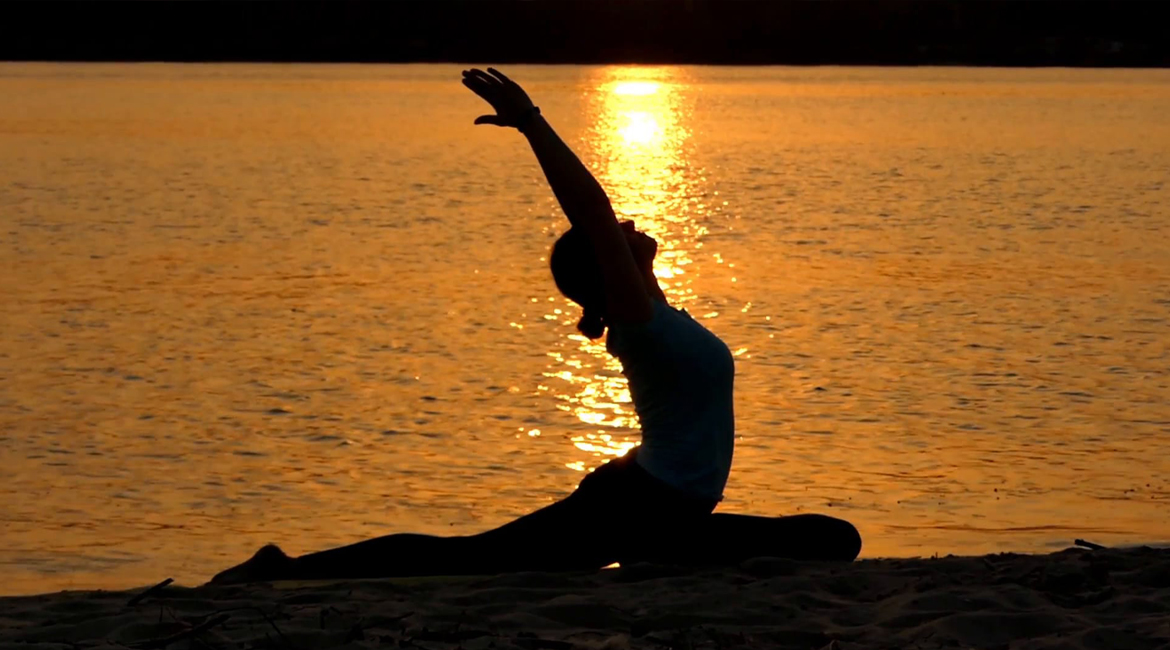
When we think of an area of existence that we do not know, we tend to frame this area in some rigid schemes, based on clichés or on the synthesis of information we had collected up to that moment. Everyone interprets what he/she does not know by relating to a common information repository and giving a personal interpretation based on what most resonates within himself with what is found within this information repository.
As for Yoga, there are many clichés, preconceptions and errors of judgment. Below I have listed ten of the main errors of thought regarding yoga and I have made some clarity about them, so that anyone who wants to approach the practice of Yoga can do it without being fooled by them.
The ten most common thinking mistakes regarding Yoga
1. To practice Yoga you must have a slim body, be very elastic, almost predisposed to contortion.
False! This idea arises from a real misunderstanding of what the Yoga system represents and its objectives. Yoga was born as a philosophical and scientific system that provides practitioners with a set of practical methods to improve their psycho - physical - mental health condition and to develop spiritually. The goal of the practice of this holistic discipline is to self-perfecting on all levels of being and thus reach a state of self-realization and spiritual liberation (Moksha) from the slavery of ignorance. Therefore, Yoga is the heritage of all humanity and can be practiced by every human being, regardless of the physical form and body type. It is not the slenderness of the body that makes you fit to practice Yoga, but it is the Yoga practice that makes you harmonious and balanced. Yoga is suitable for everyone and everyone can practice it according to their possibilities. In the practice of postures, for example, what matters most is the attitude with which they are carried out, while flexibility takes a back seat.
2. Yoga is a sport and as such requires considerable effort.
False! Even if in some countries, for purely commercial purposes, the practice of Yoga has been completely distorted and even this discipline has been framed as a sport, all this is a great falsehood. Yoga is not only not a sport, but its ideology is totally different from the ideology of any sport. The ideology of sport is based on competition. In Yoga there is an absence of competition. In sport, the effort must be constant and increasing, which generates tension and stress. In Yoga practice, the effort must be minimal, weighted, according to Patanjali's indications regarding the practice of postures. And Patanjali, in the famous Yoga Sutra treatise, says that in the practice of posture the body must be stable and relaxed. And this produces on the body, mind and psyche of the individual who practices a state of relaxation and well-being.
3. Yoga is being cross-legged, with your eyes closed, doing nothing and therefore getting bored.
False! In true Yoga practice a “gaining something without practice” approach is excluded. It is not about closing your eyes and dreaming or having time or a way to get bored. So it is wrong to think that this practice is based on non - action, or the absence of action. Yoga practice is, rather, based on conscious action, carefully oriented inwardly towards the continuous transformations of a psychic, physical, mental and spiritual nature.
4. Yoga is synonymous with religion.
False! This idea stems from the superficiality in the approach to the study of some bigoted or ill-intentioned minds who see Yoga as a potential religious competitor. It should be mentioned that, unfortunately, this idea is validated by the uninspired behavior of some pseudo-masters who, due to the lack of knowledge of the Yoga system, in turn create confusion when they want to pass for Yoga some rituals of worship of oriental deities. All this, however, is only the result of ignorance. Apart from that, those who claim that Yoga is synonymous with religion demonstrate a primitive logic and cognitive infantilism. This absurd deduction, that Yoga is a religion, arises from the fact that Yoga has its origins in the East and consequently it is assumed that the first practitioners of the Yoga system were (perhaps, because no one tells us and there is no evidence in this regard) of Hindu or Buddhist religion. Another important aspect, on which we should reflect, is that the archaeological finds that indicate the presence of Yoga in those places are much older (a few thousand years) than the appearance of the respective religions. This makes us think that Yoga was practiced on our planet before the appearance of the various religions, in an era unknown to us, when the inhabitants of the planet lived independence and spiritual freedom. We can, therefore, consider Yoga as the scientific part of spirituality, as a set of non-religious methods and techniques of inner growth that act simultaneously on the body, mind, psyche and spirit of the human being who practices them. These methods are aimed at the human being in his purity, stripped of his religious convictions, so they can be practiced by everyone, regardless of religious affiliation. A Yoga posture that improves the health of the body can be practiced by any person, regardless of their religious orientation. A mental concentration exercise to improve memory and cognitive skills is a far cry from any form of religious ritual.
5. Yoga is for women and for the elderly.
False, partially. Because Yoga is for everyone, therefore also for women and for the elderly, but also for men and young people and even for children and pregnant women. Yes, Yoga is suitable for everyone, regardless of age, social class, religion, geographical location. Because Yoga was designed for the human being and it can meet everybody’s needs. The mentality according to which Yoga is only for women and for the elderly wants to suggest, erroneously, that this practice is aimed only at sensitive people. In reality, the practice of Yoga, in some moments, can be more difficult for athletes than for women or the elderly. This is because Yoga acts on the deepest parts of the human being and to manage those parts you have to resort to real strength, the inner one.
6. Yoga is synonymous with drug use, filth, social maladjustment.
False! In this case Yoga practice is confused with some deviant actions practiced by bizarre people in India, such as those belonging to certain sects or those who are often called “baba”. Here, the problem is given by the Western person's lack of discernment when he goes to visit some parts of the world that have features and fame linked to mysticism. Generally, the Westerner who goes to these places tends to take everything for good and authentic without deigning to study such phenomena. In India, for example, it is usual to meet everywhere "spiritual people", false ascetics, people socially maladjusted and with evident psychic disturbances who are mistaken for saints, teachers, authentic practitioners. You can find similar characters, naked, dirty, smeared with mud or ashes, who take various types of drugs. Most smoke everything they can and mimic spiritual experiences by saying that they are doing Yoga. The Westerner who resonates with these aspects within him/herself will tend to assume such behaviors and will justify such absurd behaviors by saying that in India people smoke, that a certain "baba" smoked and did not wash, etc...
Instead, the truth is that all the traditional texts of Yoga speak of discipline, cleansing, purification, getting rid of all forms of vice and addiction and openly condemns the use of various toxic substances which result in changed states of conscience. All the authentic masters of the Yoga discipline have manifested a clear disagreement regarding such behaviors.
7. Believe that everything that is passed off as Yoga really is.
Absolutely false! It is well known that Yoga has become a trend in our day. For this reason, many people with a commercial mentality and few scruples combine the name of Yoga with their business. Sometimes, these people go far beyond the limits of common sense, far beyond the line between the sacred and the ridiculous. In this way we find more and more often different sporting, recreational, culinary, pseudo - spiritual and pseudo - scientific activities, presented as Yoga. We encounter practically all sorts of ridiculousness and hilarity under the name Yoga. Activities such as beer yoga, dog yoga, cat yoga, hamburger yoga, intense yoga, wine yoga and many others are not found in traditional Yoga treatises and are, as well as offensive to the millenary Yoga tradition, misleading. To these are added all sorts of gymnastic aberrations which are falsely called Yoga. Some jump with emphasis from one body position to another at great speed and pompously call this Yoga. Others invite the students to practice yoga of the breath, practicing absurd things, and then, at the end of the lesson, invite the same students to smoke a cigarette together, thus risking to cause serious damage in the organic and subtle structure of those people…. Still others invite students to recite together a long series of whispered or chanted mantras without having the slightest idea of the meaning and effects of such repetitions. And the list of havoc can continue for a long time.
As a general rule, when you want to approach a new discipline, of any kind, including Yoga, first inquire well about the specifics of these discipline and the characteristics that teachers should have. This way you avoid the risk of getting hurt and unnecessarily wasting time and money.
8. The best Yoga is practiced in India.
False! The quality of Yoga offered to practitioners is absolutely not linked to a specific geographical area of the planet or even to the area of origin. The best Yoga is practiced where there is respect for the Yoga discipline, where this discipline has been thoroughly studied and practiced, where no compromises are made for the sake of money, where the spiritual principles of authentic traditional Yoga are respected and practiced. And, from my point of view, right now there are many more opportunities to practice quality yoga in the West than in the East. The best Yoga is always offered by those teachers who have deepened the practice of this discipline until they understand the spirit of Yoga, as well as its letter.
9. Indian masters and teachers are better than others.
False! The value of a teacher is given by individual practice. We can say that the teacher is made such by the practice. To be a true master, such practice must be brought to the level of mastery. Therefore, it is not the color of the skin, the clothes worn, the turbans on the head, the stupid laugh, the sweet looks and the complacent silences, the geographic location, the country of origin to "generate" good teachers. What makes a teacher good and valiant is dedication to practice, self-denial, love of neighbor, dedication to study, seriousness, spiritual maturity, compassion for all beings, a deep sense of humility and of gratitude.
10. You must be vegan to be able to practice Yoga.
False! This is a cliché based on a lack of information. Yoga practice is suitable for all people regardless of the various eating styles. Also in this case, it is not the eating style that makes a person suitable for Yoga practice. Indeed, it is the practice of Yoga itself that will give rise to the desire in people to have a healthier and more balanced life in various existential areas, including food.
I conclude by emphasizing the importance of correct information in all existential areas. Our society, with its fast times, has accustomed us to stay on the surface, to look only at the label, to read only the title, to quickly go from one thing to another without dwelling on what we are interested in learning more about. This way of doing, paradoxically, brings with it a greater waste of time and resources, as you always find yourself in the condition of having purchased a "product" that does not correspond to the presentation or label. Unfortunately, the same thing happens with Yoga too, when it comes to choosing whether to do it or not or to choose one type of course over another type. There is an excess of pseudo - information about it, the word yoga appears before our eyes wherever we turn our heads. So it is good to slow down the daily race a little, choose to inform us well before deciding. Proper Yoga practice also helps you do this. Yoga practice makes you more responsible, more mature, more lucid and more attentive to details.
If you found the article useful, share it for the benefit of others!
Psychotherapist Virgil Calin